
Last Updated on June 29, 2026
The Haunting History of Portland’s Nathan Loeb House and the Lost Marabba West
The Answer: The Nathan Loeb House (726 NW 22nd Ave)
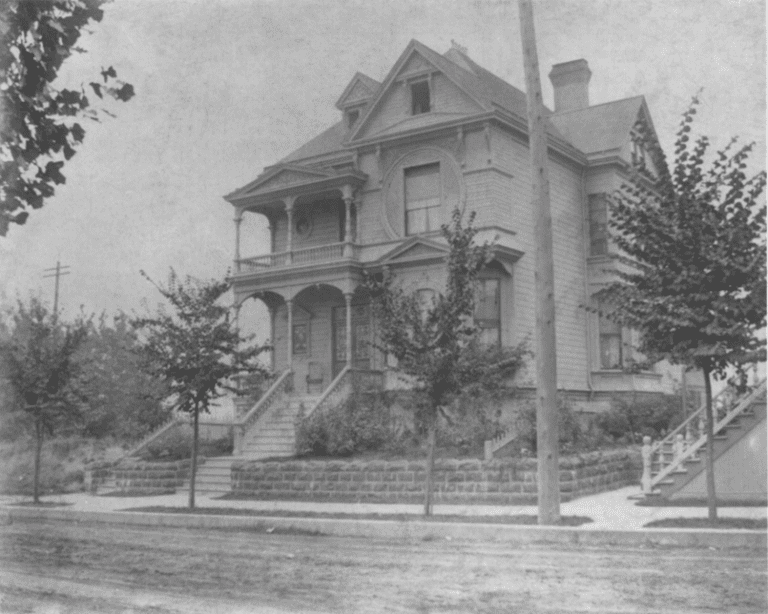
Built in 1893, this striking residence is a highlight of the Nob Hill-Alphabet District Tour. However, its history is deeply tied to one of the darkest economic eras in American history. 1895 Image of Nathan-Loeb House.
Built in 1893, this striking residence is a highlight of the Nob Hill-Alphabet District Tour. However, its history is deeply tied to one of the darkest economic eras in American history.
- The Panic of 1893: This was the worst economic depression the United States had ever seen at the time, driven in part by massive overbuilding. When the banks failed, newly constructed houses across the country were left completely vacant.
- Born from a Crash: These empty, looming Victorian houses quickly became the backdrops for local ghost stories.
- The Original Builder: Rudolph Becker built this magnificent home but was never able to actually live in it due to the financial crash. Lucky to find an occupant who could take over the property, Becker sold it to Nathan Loeb.
- The Loeb Family Legacy: Nathan Loeb ended up raising eight children in the home. Born in Germany in 1828, Loeb moved to Portland in 1857, where his brothers opened a general merchandising business at the southwest corner of First and Stark Streets.
Faux Brick and a Stunning Restoration
It is hard to imagine today, but at one point, there was a strong desire to clad this beautiful home in faux-brick asphalt siding.
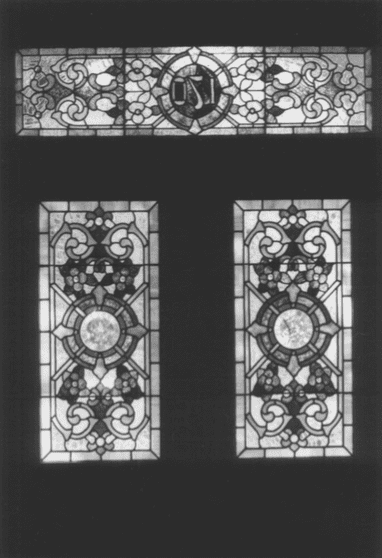
When the Nathan Loeb House National Register Nomination was being prepared in the late 1970s, preservationists relied heavily on two invaluable 1895 photographs captured by the photographer Kaufman. These historic images became the blueprint for the home’s meticulous restoration.
As recorded by Deirdre Stone in the November 1978 issue of The Neighbor (p. 10):
“Using the Kaufman photos, Jerry Bosco and Ben Milligan of Westblock Glass duplicated the original stained-glass designs and re-installed them.”
Today, it features what the author of this post considers to be the single best window in all of Portland.

For That Matter… What Was the Marabba West?

The Marabba West was a historic residential hotel building with an extraordinary, shifting identity. Over the decades, this single apartment building wore many names and served diverse communities.
- The Hill & The Hobart-Curtis: The building first opened its doors as a residential hotel known as “The Hill,” and was later renamed the “Hobart-Curtis.”
- Jeanne d’Arc Young Women’s Hall: When the Sisters of Mercy took over management, they transformed the building into a safe haven for single women working as secretaries or department store clerks.
- A Sanctuary for Working Women: This women-only apartment building was strictly managed by nuns who protected the residents’ reputations and fostered a vibrant community. The Sisters of Mercy even held regular religious services in the on-site Jeanne d’Arc chapel.
An advertisement in The Oregonian on November 23, 1919 (p. 43) perfectly captured its mission, noting that the furnished rooms provided reasonable rents for:
“…business girls and lady tourists, permanent or transient. Special features within the limitation of the minimum wage earner.”
