Marking the Unmarked: Who Lies Beside Reverend Daniel Drew?

Marking the Unmarked: Who Lies Beside Reverend Daniel Drew?

The Soldier, The Minister, and His Silent Neighbors

If you wander through the Historic Columbian Cemetery in North Portland—also known over the years as Love, Columbia, or Columbia Slough Cemetery—you will find along the road side fence a simple veteran’s marker for a man whose life spanned the most transformative eras of American history. The Department of Veterans Affairs often provided free government headstones or markers for eligible deceased veterans. This program provided the loan marker in this section of the cemetery.Located at 1151 N Columbia Blvd, the cemetery is currently under the care of Steelmantown Cemetery Co., who continue the work of preserving this sacred ground.

Marking the Unmarked

Head Shot of Daniel Drew Formal B&W image of a main with receeding hairline and a trimmed beard and mustachReverend Daniel Drew (1843–1923) rests at Section OS, Block 52, Lot 8 N½. While his headstone stands as a lone testament to his service, the ground around him tells a broader story. Buried alongside him in unmarked graves are four of his family members.

The Drew Family Plot

While Reverend Drew is the only resident with a headstone, records indicate he is surrounded by his loved ones. We can now name those who rest beside him:

Name Relation/Details Born Died Age
Daniel W. Drew The Reverend 1844 1923 78y
Laura Ann Drew Wife (Thompson) 1848 1925 77y
William Sherwood Drew Son 1875 1937 61y
Jennie Drew Daughter-in-law (Polk) 1880 1924 44y
Alice M. Drew Family Member (Webb) 1886 1949 63y
Head Stone Image From Find a Grave

I first encountered Daniel Drew’s story while working with the owners of the cemetery for the Harvest Fest Event on October 20, 2018. The team included Drew in a booklet highlighting notable residents, sparking a research journey that led from the cemetery grounds to the archives of the AME Church. As the volunteers at the Genealogical Society complete their indexing and typing of these historic records, one can only hope that eventually people will step up to honor all the Black residents in this section whose names have been lost to the “trace documentation” of time.


A Military Man Seeking Peace

Daniel Drew was a case study in From Whence We’ve Come: The Development of Black Religious Life and Culture in the Pacific Northwest  that I co-presented presented at the Louisville Institute with Pastor Terry McCray of Bethel AME Church.

Pastor McCray and I found many forgotten AME churches on the far west and Daniel Drew’s life and religious journey stood out.  The AME Church is a connectional organization and pastors receive a yearly appointment to a charge (church). Daniel Drew was the only Itinerant AME preacher stirred our hearts.

Born into slavery in Virginia, Drew was laboring in chains in Arkansas when the Union Army arrived. For Drew, freedom was an action; he traveled to St. Louis and enlisted, serving as a private in the 3rd Arkansas Infantry before a reorganization placed him in the 56th Colored Regiment.

His relationship with his military past was a lifelong tug-of-war between his patriotism and his pacifist faith. Though he was nominated as the Head Chaplain of the Oregon Grand Army of the Republic (GAR) in 1919, he famously resigned his post in 1904:

“…because he thought the order was against his religion as it fostered a spirit of war.”

Yet, his devotion to his fellow veterans never wavered. In 1902, he was instrumental in raising $3,500 for the soldiers’ memorial at Lone Fir Cemetery, ensuring that those who fought were never forgotten. His efforts to create the soldier’s memorial has misled some scholars to presume that that is the location of his final resting place. Example Oregon Black Pioneers Entry on Daniel Drew.


The First Black Quaker Minister

Drew’s spiritual journey is a “complex and multifaceted” narrative. Educated at the Southland Institute, a Quaker school in Arkansas, Drew was ordained in 1871 as the first known Black minister of the Society of Friends (Quakers). Quaker Jessica Bucciarelli‘s entry on Daniel Drew is a wonderful springboard.

His ordination was the beginning of a small but significant legacy; there had been eleven Black recorded ministers (all male) when the meeting was laid down at the Southland’s closing in 1925. However, being a pioneer came with friction. As noted by The Black Quaker Project:

“Quakerism does not provide the same sense of agency, self empowerment, and kinship offered by Black denominations of Christianity forced conformity. Although Quakers stand amongst history’s most outspoken abolitionists, Friends did not treat African Americans as equals.”

This may explain Drew’s eventual shift. After moving to Portland with his wife, Laura Ann, and their son, William, Drew initially joined the Sunnyside Quaker Meeting. By 1907, he transitioned to the African Methodist Episcopal (AME) Church, becoming a pillar of Bethel AME on 10th and later Larrabee Street.


A Voice for Portland

In Portland, Drew was a “dynamic individual” known for his oratory. In 1902, the Oregon Journal reported he would deliver an address on “The Condition of the Colored Race, Before, During and After the Civil War”. He was a man who had known Lincoln personally and spent his final years in North Portland at 1759 Courtenay Street (pre-1930 address), balancing his spiritual leadership with laboring in local gardens.

Final Words

While only Daniel Drew’s headstone marks the plot today, leaving his family in a silence, his legacy remains loud. We close with his own words from a GAR Chaplain’s report:

“Let us be at our best at all times, supporting and encouraging in every possible way those things that are just and right that we may have the approval of the great judge when we shall be called before him.”

The Great Curb Guard Disappearing Act

Picture of a curb replacement on Charleston in St. Johns

FF #84: In the world of urban history, the sidewalk isn’t just concrete—it’s a time capsule.

These “hidden histories” are vanishing. Remember those metal curb guards? Between age, neglect, and necessary ADA ramp upgrades, these iron relics are becoming a rare breed. If you missed it, check out this classic video by Berkeley and Tanya from five years ago – diving into the world of curb guards. [Watch: Slabtown Tours: Berkeley Introduces Curb Guards]

Blacksmiths & Horseshoes

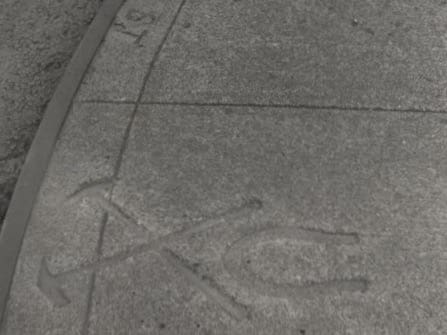
A rounded cement curb with a band of metalJim Stewart of the St. Johns Heritage Association shared some incredible “lost” history with us. Back in 1976, a club member captured images of cement stamps from 1915 that have since disappeared. This mark featured was at N. Ivanhoe & Alta: This stamp marked the spot of Misner & Thompson, a local blacksmith shop. The Rare Horseshoe: Finding a horseshoe imprint is like finding a four-leaf clover – I could only find one other example in the Slabtown Tours office files. Christopher A. Gossett’s 1983 book, Rubbings from the Rose City, noted a rare 1905 example on a horse shoe encapsulated in the cement of the southeast corner of SE Union (now Southeast Martin Luther King Jr. Boulevard) and Alder.

S

pot the Historic Stamps Next time you’re walking the dog or grabbing coffee, keep your eyes on the pavement.

You might just be standing on a piece of hidden history.

Have you spotted a unique sidewalk stamp in your neighborhood? Reply with a photo or the cross-streets—I’d love to help track down the history behind it!

Mark in cement in all caps WASHINGTON- ST.From the archives of The Neighbor newspaper. Until 1891 Burnside from N.W. 12th west was Known as Washington Street.  Like streets everywhere in the Alphabet District, Burnside was names after a prominent merchant of the late 1800

s.  The sidewalk march was still visible in  until Thiele’s Restaurant at N.W. 23rd and Burnside (Washington) was replaced with Thiele’s Plaza.


Another example of history lost from Jim Stewart.

These horseshoes where N. Charleston Ave. dead ends at N. Ivanhoe St. Maguson & Colglazier occupied the Blacksmith shop at this location when the sidewalk was laid in 1915. (Image c. 1976)

“NW 28th Place (the west side of 28th Pl) and Upshur. Originally our street was named Meriwether Place and there was a sidewalk stamp…but over the years, sidewalk replacements and updates have since rendered it to MERIWET!” – Natalie Maciukenas

Fun Fact #83 A Century Old Theater in Nob Hill

three adults clinking glasses a PR shot

Where could you go in NW Portland in the 1920s to experience a Spiritualist Service?

Man Clean Shaven in turban
Dr. Ford at the State Theater ad Courtesy the Oregonian Jan, 16 1927 p 59.

In January 1927, you could attend a service by one of the world’s most famous spiritualist mediums, Arthur Ford, at The State Theater [The original name of Cinema 21]. Advertisements in The Sunday Oregonian promoted his lectures. Preforming as Dr. Ford “The Miracle Man” he offered a mystic and mind-reading presentation. The ticket holders for the four day run each night at 8:15Pm were also treated to: Prince Zulong (glass eatter) Mysteria the girl with 1,000 eyes. Had it not been for the picture of Ford in a turban I would have just assumed they were playing “The Miracle Man” movie and let it there.

American Vaudeville was an entertainment form in the United States from the 1880s to the 1930s. In the early years it was a hodgepodge of of 10-20 live acts, by the 1920s the art form way dying out one or two acts in addition to the live organ might perform prior to a film screening.  

About Arthur Ford

three adults clinking glasses a PR shot
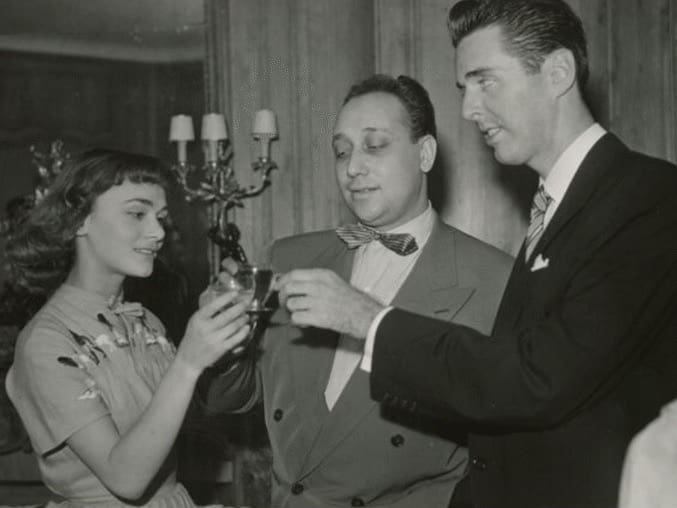
Image of French film director Jean-Pierre Melville, French actress Daniele Delorme, and American psychic Arthur Ford having cocktails at Paris’s Hotel George V, January 2, 1949.
  • Background: Ford was an ordained minister who transitioned to become a professional spiritualist medium. He joined Spiritualist Church around 1921, and began traveling as a spiritualist trance medium. He founded the Spiritual Frontiers Fellowship and wrote books documenting his experiences, such as Life Beyond Death.
  • Claims: During World War I, he claimed to hear the names of soldiers days before they appeared on casualty lists. He later professed to be controlled by a spirit guide named “Fletcher.”Book by Arthur Ford "The Man Who Talked with the Dead" has a head shot of the authir
  • Famous Allegations: He gained significant fame for his alleged communication with the spirit of the late Harry Houdini, claiming to have revealed a secret code the magician had arranged with his wife Bessie. Houdini died on Halloween in 1926. His wife Beatrice (Bess) offered $10,000 to anyone who could produce an authentic message from the spirit of her husband. In 1928 Author Ford hosted a seance, while controversial, made him a household name. We found no recordings made of Dr. Ford a 1978 documentary/”death-sploitation flick”, Beyond and Back  produced by Charles E. Sellier Jr. covered the event Link to a three minute clip. The press of the day called him a fake – Ford didn’t pursue the matter and he didn’t collect the $10,000.

A Brief History of Cinema 21

  • 1925: Opened as The State Theater with a focus on silent films and vaudeville acts, featuring a William Wood pipe organ and live orchestra.
  • 1941: Renamed The Vista.
  • 1942: Renamed The 21st Avenue Theatre.
  • 1962: Renamed Cinema 21, under the ownership of Martin Foster.

A unique feature from its past was a dedicated “crying room” for babies, a thoughtful convenience that allowed parents to watch the film without disturbing other patrons. 

While creating a video to honor a century of operations, we focused on the theater’s legacy and its leader for nearly half a century Tom Ranieri:

I was already working here for a Seattle-based company when they closed the theater in the summer of 1986. I reopened it the following spring. It was an opportunity with very low start up costs and I didn’t have any other employment ideas at the time, so I basically took the path of least resistance.

Book a ticket on our A Night With Ghosts Tour to learn about an incident in 1909 that led to Spiritualist Church Members kidnapping an eleven-year-old boy.

Fun Fact #82 Why were Portlanders wearing face masks in 1980?

Fun Fact #82 Why were Portlanders wearing face masks in 1980?

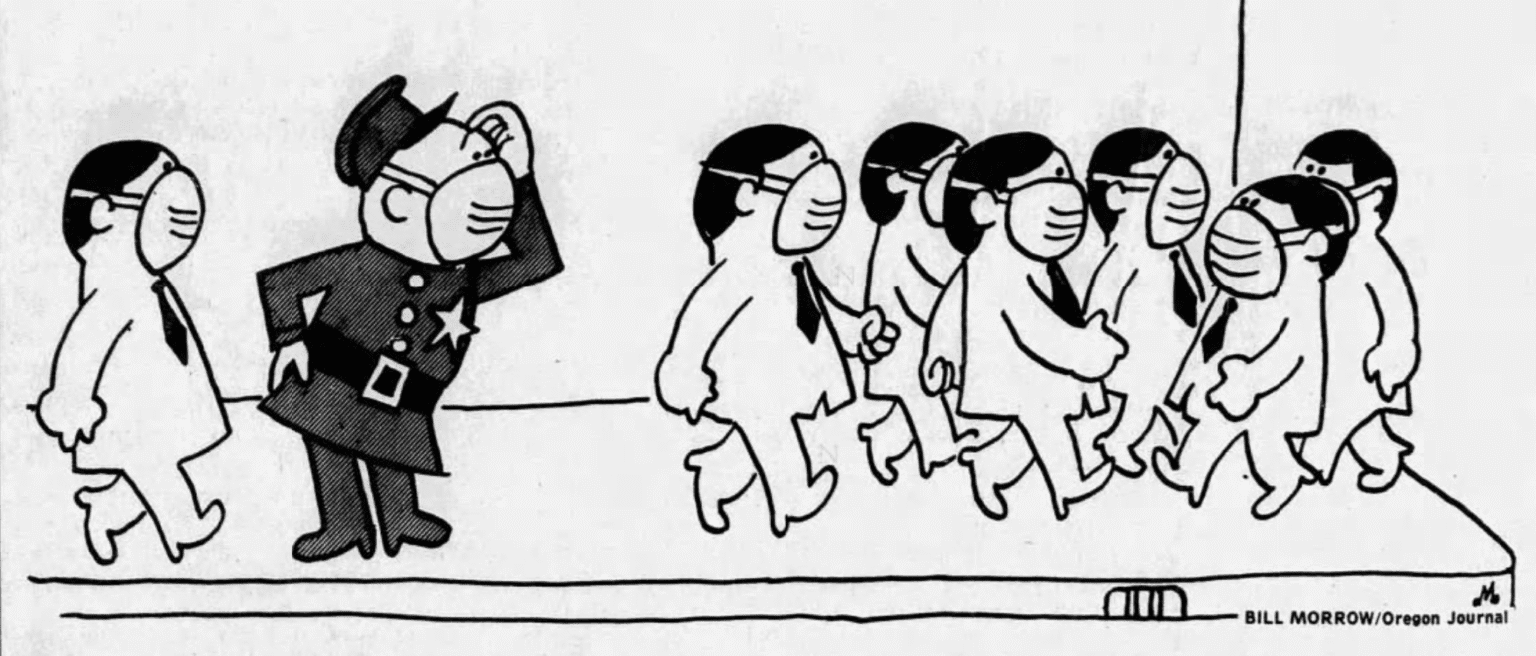
Portlanders wore face masks in 1980 to avoid breathing in volcanic ash. Following the eruption of Mount St. Helens on May 18th, 1980 the wind blew east sparing the city until the wind shifted. The eruption released a massive ash cloud that spread across the Pacific Northwest and beyond. While Portland was not directly in the path of the heaviest ash fall, it still received a considerable amount.

Oregon Journal June 24, 1980 cartoon by Bill Morrow. Bill Morrow, staff artist for the Oregon Journal 1972-82 and for The Oregonian 1982-89, died Friday, Feb. 21, 2014

Ash plum rises over Mout St Helens the Fremont Bridge is in clear view Mt. is in background cover OregonianCover of Oregonian Newspaper showing massive eruption and ash Mount St. Hekens

OHS has preserved a Mount Saint Helen’s oral history series.


Image of a gathering of individuals looking to cross north on Burnside and 18th te group of strangers some of whom are in masks are trying to avoid breathing in volcanic ash. Rupert Jenkins, 1980
Rupert Jenkins’ image of a group rushing home once Mt. Saint Helens ash started falling on Portland is one of my favorite street scene images.
An African American Family wearing what might be N95 masks. Two adults and a child might be cold hands are in their pockets walking towards a very 1970s Parking meter.
“May 26, 1980. Portland, Ore., residents wear protective masks” AO Photo Bill Haber as published in Galesburg Register-Mail


“The Cut” is not a natural ravine. Fun Fact #81

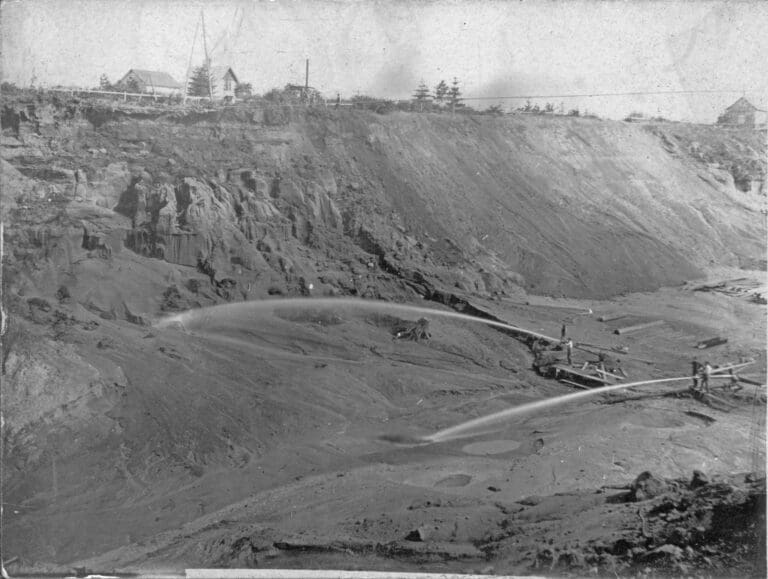
Image of a 100' tall 80' ditch being created by two high pressure water blasts in operation. People look like ants in this image.

Why was Portland’s Mayor against the construction of “The Cut”?

Image of a 100' tall 80' ditch being created by two high pressure water blasts in operation. People look like ants in this image.
St Johns Sluicing to Creat Cut c. 1907. Courtesy Norman Gholston.

Portland’s mayor Henry Lane’s strongly opposed giving SP&R a franchise in 1906. SP&R had opted to create a trench rather than a tunnel. Lane declared this proposal “a defacement of property and a visual blight [an] out-and-out give-away…destroy the unity of the neighborhood.” Portland City Council members overrode the Mayor’s veto. Leading to “the Empire Maker”, James J. Hill receiving the lucrative franchise. Ultimately, Hill’s considerable influence and financial resources ultimately prevailed and the Spokane, Portland & Seattle Railway (SP&S) received the franchise.

A Deep Divide, A Looming Threat: How Railroad Greed Left St. Johns Vulnerable

Trench with trains
Trench dug by Spokane Portland & Seattle Railway through North Portland. c. 1907 Courtesy OHS Oregon Journal 371n5131

Residents of St. Johns consider “The Cut” to be the neighborhood boundary; it is close to the historic boundary between the historic cities of St. Johns and Portland. The construction phase pre-dated the St. Johns Bridge (19310. Unsurprisingly, all of the four original 1909 steel deck truss bridges over “The Cut” were designed by Ralph Modjeski. The bridges over Fessenden, Lombard and Willamette today are owned by Burlington Northern Railroad and replaced over a dozen surface streets that once flowed out of  St. Johns. According to, Egon Terplan, Regional Planning Director SPUR states in a documentary about Modjeski: “Our failure to maintain these bridges threatens our future.”  Modjeski also designed the railway bridges on either end of the cut that cross the sloughs and the Columbia and Willamette Rivers.

Local lore in North Portland speaks of a deliberate divide, a chasm carved to isolate the then-independent City of St. Johns from the burgeoning city of Portland. However, the enduring geographic scars are the responsibility of the railroads, an industry whose relentless pursuit of progress historically overshadowed community well-being. The construction of “The Cut” an eighty foot deep ravine disrupted the evolving streetcar system, and funneled access on the peninsula onto four bridges spanning The Cut. The construction cost was  a three-million-dollar project (equivalent to $74.46 million in 2025).

Image of Scottish atried man posing in the back seat of a 1900s car. in a winter coat with round traditional hat.
Hill, James Jerome (1838-1916) Courtesy HistoryLink.org

James J. Hill

This physical manifestation of ambition was largely the brainchild of railroad magnate James J. Hill, the driving force behind the Spokane, Portland & Seattle Railway (SP&S). Known as “the Empire Builder” by admirers – a man who famously opposed labor unions, stating they would cause “grave financial reverse”. The Cut offers a direct, level route to a vital railroad bridge, ensuring trains maintained speed, unhindered by natural topography or existing neighborhoods. The earth excavated filled critical riparian marshlands, reshaping the natural environment to serve the burgeoning rail infrastructure.

The first train navigated “The Cut” on November 17, 1908. SP&S’s competition, the Oregon and Washington Railroad and Navigation Company, started operating on the one-mile long Peninsula Railroad Tunnel parallel to the cut in 1911. The City of Portland ordinance granting both companies franchises. “The Cut” with its massive excavation was notably unfavorable, lacking a construction time limit or a recall provision, potentially violating the City Charter’s common user requirement, and stipulating that the railroad would bear no costs beyond their own land investment and the replacement of existing streets with a mere four steel traffic bridges: N Willamette, N Lombard, N Fessenden (BNSF owned), and N Columbia (PBOT owned).

History’s Long Shadow 

North Willamette Boulevard overcrossing in Portland. Built in 1909 by the Spokane, Portland and Seattle Railroad, it is distinctive as one of only four hanging deck trusses in the state; it also sports attractive vintage lattice steel railing. This bridge was strengthened in 2011 so that it could continue to be a useful part of the transportation system.
North Willamette Boulevard Over crossing image c 1989 bridge strengthened in 2011. Built in 1909 by the Spokane, Portland and Seattle Railroad, it is distinctive as one of only four hanging deck trusses in the state; it also sports attractive vintage lattice steel railing. Image Courtesy ODOT

Today, this historical decision casts a long shadow. Where sixteen streets once seamlessly connected the St. Johns Peninsula, only four now remain, reliant on bridges to traverse the artificial ravine. The consequence of prioritizing railroad efficiency over community well-being is a looming crisis. Experts have determined that the four bridges spanning “The Cut” are highly vulnerable to collapse in a significant seismic event. This leaves the approximately 15,291 residents of the St. Johns Peninsula facing the terrifying prospect of being physically cut off.

Fessenden Bridge Courtesy ODOT

Today’s Crisis

The current crisis reflects a century of perceived neglect. The community seeks a seismic upgrade of the Columbia Blvd bridge, managed by PBOT. Without it, the fate of North Portland Peninsula residents in even a mild quake is a gamble. Without a functioning bridge, families will be separated, and emergency access will be severed. An emergency route on Columbia Boulevard is imperative.

Architectural Detail of the lace like railing
Courtesy ODOT


What career path led J.T. McCready to be a hotelier?

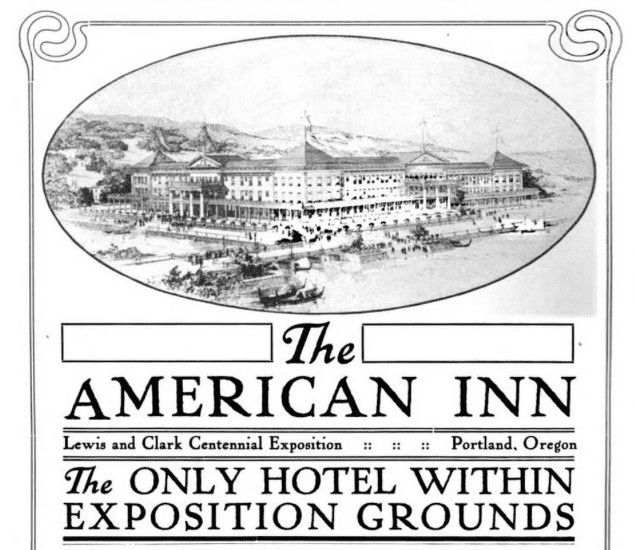
Postcard of the American Inn

Fun Fact #80 Isn’t it fascinating to discover the unexpected paths people take in life?

Today’s fun fact dives into the story of Mrs. J.T. McCready, the woman who ran the only official hotel of the 1905 Fair right here in Portland! What surprising career journey led Mrs. McCready to become a hotelier for such a significant event? Was she a wordsmith, a culinary artist, a show business mogul, or something else entirely?

A) Poet B) Pickle Maker C) Restauranteur D) Impresario

Image on a hotel (postcard) refection on the lake notes the hotel
Mark Borckardt Numismatic Postcards courtesy: NNP at Washington University in St. Louis


The answer might just leave you in a bit of a pickle of surprise!

Answer: B) Pickle Maker/Relish Maker

That’s right! Before she was welcoming guests to her hotel, Mrs. J.T. McCready was renowned for her delicious pickles and preserves. Let’s dig into the fascinating story behind this unexpected transition:

A clipping below from an October 31, 1885 article reveals that Mrs. McCready opened a shop specializing in preserves, jellies, and, of course, her famous pickles. Her father was a politician in Buffalo, but her foray into the culinary world began more organically. She started “in business” by making preserves for a friend who was busy caring for a sick father. Her knack for creating amazing pickles quickly garnered attention and demand grew, leading her to open her own shop.

Fast forward to the Pan-American Exposition (World’s Fair) held in Buffalo, New York in 1901, and you’d find Mrs. McCready as a successful vendor. Her entrepreneurial spirit and proven ability to manage a business were exactly what fair organizers were looking for. Following the negativity surrounding President McKinley’s assassination at the Buffalo fair and lingering safety concerns from the horrific H.H. Holmes murders at the 1893 Chicago Fair, the need for strong and capable leadership with a women’s touch was paramount.

While Ellsworth Statler had successfully managed fair hotels in Buffalo and St. Louis, Portland had a different vision for their 1905 event. They wanted a woman at the helm, and Mrs. McCready’s track record as a successful entrepreneur, who had already navigated the complexities of a World’s Fair as a vendor, made her the perfect choice to take the reins of the official hotel.  (We have another post that goes into the history, preservation and relocation of the hotel   American Inn Fun Fact #30.)

It’s a testament to Mrs. McCready’s adaptability and business acumen that she could transition from crafting delectable pickles to managing the accommodation needs of a major international event. Her story reminds us that sometimes the most unexpected paths can lead to remarkable achievements.

What do you think of Mrs. McCready’s journey? Did you see that answer coming? Share your thoughts in the comments below!

Fun Fact #79 Which equine autobiography was first published in Portland, Oregon?

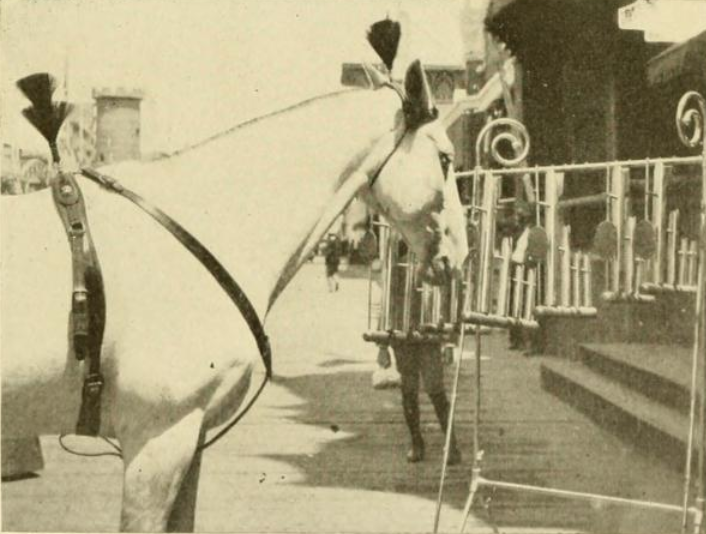
Trixi in Sioux City 1904 with her "master" man with mustash behind picture has cursive writing "Princess Trixi doing her mathimatical problems" there are levers her mouth can reach numbers 1-9.

Which equine autobiography was first published in Portland, Oregon?

A: Black Beauty (1877)

B: Strider: The Story of a Horse (1886)

C:  Princess Trixie (1905)

D: War Horse (1982)

Answer Princes Trixie: Queen of all Educated Horses Autobiography: an accurate account of the sayings and doings of the wisest and most highly educated horse in the world. Free link to the entire book: Link to Book


The animal autobiography as a genre is problematic. Princess Trixie: Autobiography: an Accurate Account of the Sayings and Doings of the Wisest and Most Highly Educated Horse in the World is an account of a Grey, ½ Arabian mare who worked internationally as vaudeville entertainer.

The first edition of the book was sold to her fans at the 1905 Lewis and Clark Exposition and Oriental Fair. Her initial repertoire of bowing, playing the chimes, and simple math grew along with her talents. Now that she was able to count and multiply she was used to market the cash register for National Cash Register Company by demonstrating making change and keeping accounts in check. She performed alongside the two diving elk in Portland. Trixi was an advocate for the humane treatment of animals and was an honorary member of humane societies. Her death in a train wreck was national news in 1909.


Fun Fact #78 But did you know that one of her more than twenty science fiction novels is set right here in Portland?

Ursula is signing a copy of Cat Wings for Brooklyn at Powells Books there are dozens of black and white pages pined to the wall behind them

Ursula is signing a copy of Cat Wings for Brooklyn at Powells Books there are dozens of black and white pages pined to the wall behind them
Brooklyn & Ursula 2013 – Image credit Tanya March.

Ursula K. Le Guin a visionary writer

whose groundbreaking works redefined science fiction and fantasy. She won numerous prestigious awards, including a National Book Award and multiple Hugo and Nebula Awards, and was even a finalist for the Pulitzer Prize. Le Guin’s influence extends far beyond genre fiction—her thought-provoking storytelling tackled themes of gender, power, and society, inspiring generations of readers and writers alike.


Book cover of Lathe of Heven with buildings falling down.Did you know that one of her more than twenty science fiction novels is set right here in Portland?

The Lathe of Heaven, first published in 1971 as a series in Amazing Stories magazine, is a dystopian sci-fi masterpiece set in a futuristic version of Portland, Oregon, in the year 2002. In Le Guin’s vision, the city of the future ballooned to a population of three million and is plagued by endless rain. The novel follows George Orr, a man whose dreams have the power to alter reality. As he struggles to control this extraordinary ability, he becomes entangled with a well-meaning but dangerously misguided psychiatrist who tries to reshape the world into a utopia—with unintended and often catastrophic consequences.

For Portlanders, The Lathe of Heaven offers a fascinating, if unsettling, glimpse into a reimagined version of their city. However, fans listening to the audiobook, narrated by George Guidall, may notice some geographic mispronunciations—an amusing quirk for listeners familiar with Portland.

Cover of Blue Moon over Therman street an elderly white man is sitting in a chair on a porch facing Thurman StreetBlue Moon over Thurman Street (1993)

Le Guin herself roots run deep in the city. She spent years walking along Thurman Street from her home in Portland’s Willamette Heights neighborhood. Her home is now a not for profit writers; retreat. Another book based on Portland was seven years in the making, it dovetails her poetry with images taken by photographer Roger Dorband. Their book, Blue Moon Over Thurman Street, is ideal for any lover of Jane Jacobs, the poems and pictures record the street ballet along NW Thurman street in the 1980s, reflects on the gentrification of Slabtown, income and housing inequities capturing a moment of transition in Portland’s evolving identity.

Fun Fact #77 Who was the First American Woman Impresario?

Photograph of Lois Steers seated at a desk in a corner of the Steers-Coman office. Her back to the camera, she is working at the desk, wearing a shirtwaist blouse and with her hair done in the pompadour style popular in the early years of the 1900's. A second chair, empty, sits near the desk. The walls visible in the photograph are covered with portraits of musical celebrities. There are also framed portraits sitting on the top of the desk.

Fun Fact #77 Who was the first woman in the United States to manage a series of musical concerts, bringing international talent to cities across the Pacific Northwest from 1902 to 1936?

Photograph of Lois Steers seated at a desk in a corner of the Steers-Coman office. Her back to the camera, she is working at the desk, wearing a shirtwaist blouse and with her hair done in the pompadour style popular in the early years of the 1900's. A second chair, empty, sits near the desk. The walls visible in the photograph are covered with portraits of musical celebrities. There are also framed portraits sitting on the top of the desk.
Lois Steers in her office a lovely 1900s pompadadour hairstyle. Courtesy Multnomah County Library.

Lois Steer, a trailblazing impresario and visionary in the world of music, was the first woman in the United States to manage and promote musicians and musical concerts on such a grand scale. From 1902 to 1936, Steer transformed Portland, Oregon, into a cultural epicenter. She arranged world-class performances across the Pacific Northwest, from Oregon to Utah, Idaho, Washington, Montana, and British Columbia- all from her Portland business. According to the press, she handled hundreds of distinguished artists during her tenure, presenting them to eager audiences in both large and intimate venues.

Born into the Steer family in 1882, Lois moved with her parents to Portland, Oregon, at the age of thirteen. Early on, she showed great promise as a gifted singer, and she continued her musical training in New York City. By the time she returned to Portland in 1901, she was ready to embark on a new path—not as a performer, but as an impresario. 1902 was a pivotal year showing that she had the skills needed to flourish; she presented Lillian Nordica, one of the leading sopranos of the era, to a packed house in Portland, marking the beginning of her remarkable career.

Nathan Simon House – 2144 NW Flanders Street 

Steer’s early residence in Portland was in Nob Hill, at the Nathan Simon House – 2144 NW Flanders Street—an elegant 1880s structure that matched her growing stature. She was a woman who defied the norms of her time, carving out a successful career in an industry dominated by men. While some researchers have speculated that Steer may have shared certain personal traits with another prominent Nob Hill resident, Mary Couch, no one could deny that Lois’s achievements spoke volumes. She maintained an air of mystery about her personal life, keeping it out of the gossip columns while cultivating an atmosphere of discretion that made her beloved by artists. (This location is included on our Women of Nob Hill Tour)

Stars like Fritz Kreisler, Ernestine Schumann-Heink, and members of the New York Symphony and Chicago’s Grand Opera Company all found themselves in Portland thanks to Steer’s keen eye for talent and her impeccable ability to create unforgettable performances. She was a master at navigating the complexities of the music world, fostering a reputation as one of the most professional and dependable managers in the business.

Two women at a desk.
The photograph shows Wynn Coman and Lois Steers in the Steers-Coman office. Lois Steers is facing the camera. Both women are dressed in long skirts and long-sleeved blouses. Portraits of contemporary musical celebrities occupy the wall behind them. Courtesy Multnomah County Gallery

In 1904, Steer joined forces with Wynn Coman, a strategic partnership that would propel her career even further. As the city of Portland experienced rapid growth following the 1905 Lewis and Clark Exposition—whose success brought national attention to the city—Steer and Coman became a symbol of cultural excellence. They set a new standard at the Marquam Grand Theatre, and later the Heilig Theatre, both renowned for presenting only the best in music, and attracting Portland’s most refined audiences. Their influence extended far beyond the stage, reshaping Portland’s cultural landscape in ways that are still felt today.

Oregon Journal (published as OREGON DAILY JOURNAL) - October 21, 1957 - page 6
Oregon Journal October 21, 1957 – p 6

But Steer’s legacy was not just in her remarkable ability to manage these extraordinary performances; it was also in the way she navigated the industry’s often harsh realities as a woman. When she retired in 1936 after three decades of breaking barriers, she famously declared, “I have never taken refuge behind my sex. I got into a man’s game and I asked [for] no consideration because I happened to be feminine.”


Lois Steer’s legacy as an impresario endures, not only for the incredible talent she brought to Portland, but also for the indomitable spirit with which she navigated a man’s world, forever changing the cultural landscape of the Pacific Northwest and leaving a lasting mark on the music industry at large.

Lois Steers Oregon Journal March 2, 1938 – page 26

Fun Fact #76 Did the Zamboni Break Down?

Image of a Ford Car with a driver and pasanger pulling a plow with a man riding it.

Image of a Ford Car with a driver and pasanger pulling a plow with a man riding it.No, the Zamboni didn’t break down.

This image from The Oregon Daily Journal on January 13, 1918, shows a crew resurfacing the ice at the NW Marshall Street Rink. It highlights an early improvement over previous methods, which relied entirely on manual labor. Before the Zamboni was invented, ice resurfacing at natural and mechanical rinks involved pulling a scraper behind a tractor—or, in Portland’s case, behind a Ford sedan.

The Ice Hippodrome in Portland faced significant challenges in preparing smooth ice for hockey games. Before the use of motorized vehicles, workers relied on hand scrapers and brooms to remove ice shavings. They then poured water onto the surface, squeegeed off the dirty layer, and finished with a final application of clean water.

The Largest Ice Rink in the World designed by Arthur J. Maclure opened in 1916. The Rink was built by Canadian Investors in Portland, OR. Demolished in 1963.

The repurposed Ford sedan shown in the photograph was purchased from C.W. Pilchard of the Portland Garage. This innovative setup gained attention after a test drive made local headlines, reporting on the Ford pulling what appears to be a baseball infield dirt scraper. The NW Marshall Street Rink measured 321 feet by 85 feet, making it significantly larger than today’s professional hockey rinks (200 feet by 85 feet) and Olympic figure skating rinks (200 feet by 98 feet). Today, resurfacing a rink takes less than 15 minutes, but before 1950, the process could take up to an hour, resulting in a very long intermission during hockey games.

Creating a smooth ice surface was a labor – intensive process. Workers would first scoop away ice shavings, spray the surface with water, and then use squeegees to remove the dirty water. Ideally, the final step involved applying hot water, which would freeze and create a smoother finish.

The Portland Rosebuds were the first professional U.S. ice hockey team on the West Coast and were nicknamed “Uncle Sams.” They played in the Pacific Coast Hockey Association (PCHA) and are notable for being the first American team to compete in the Stanley Cup Finals. Although they lost the 1916 finals, their name was still engraved on the Stanley Cup. The Rosebuds played at the Portland Hippodrome from 1914 to 1918 (see Fun Fact #38 about the arena).

A 1917 image listed in Ebay as “Early Zamboni Ice Cleaning Machine” Other versions online have the name Dorothy Klewea written on the print. No source or location.

America led North America in the construction of artificial ice rinks.

Canadian teams didn’t have artificial ice rinks until 1912, and by 1920, there were only four such rinks in total. During the final year of professional hockey at the Hippodrome, the rink’s owners experimented with a motorized ice resurfacer, a precursor to the Zamboni (which was patented in 1953). Beneath the Hippodrome’s concrete floor were 20 miles of pipes carrying 12-degree brine to keep the ice frozen. The refrigeration system was powered by compressed liquid ammonia, which expanded in pipes running through a massive brine tank. The cold brine was then pumped through the rink’s pipes, freezing the layer of water above the flooring.

After their 1916 Stanley Cup appearance, the Rosebuds played two more seasons before relocating to Victoria, B.C. Today, the “Rosebuds” name is used by the Portland Winterhawks hockey team’s dance troupe, which practices at Lloyd Center Ice on Wednesday nights.