Last Updated on June 29, 2026
Hint: It was not in a hospital.
The Bizarre History of Portland’s 1905 Infant Incubator Carnival
Have you ever walked through Portland and wondered what incredible, forgotten histories took place right beneath your feet?
As a PhD historian leading premium walking tours in the Pacific Northwest, my mission is to unearth the gripping, strange, and deeply moving stories that shaped our region. One of the most fascinating—and shocking—chapters of Portland’s past occurred during the 1905 Lewis & Clark Centennial Exhibition and Oriental Fair.
Long before modern neonatal intensive care units existed, premature babies in the Pacific Northwest were saved not in hospitals, but as a paid carnival attraction.
25 Cents to See a Miracle: The 1905 Lewis & Clark Exposition
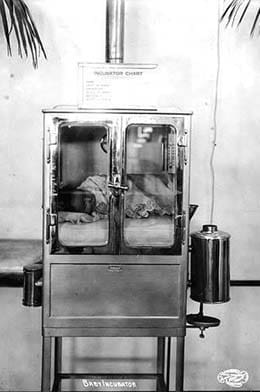
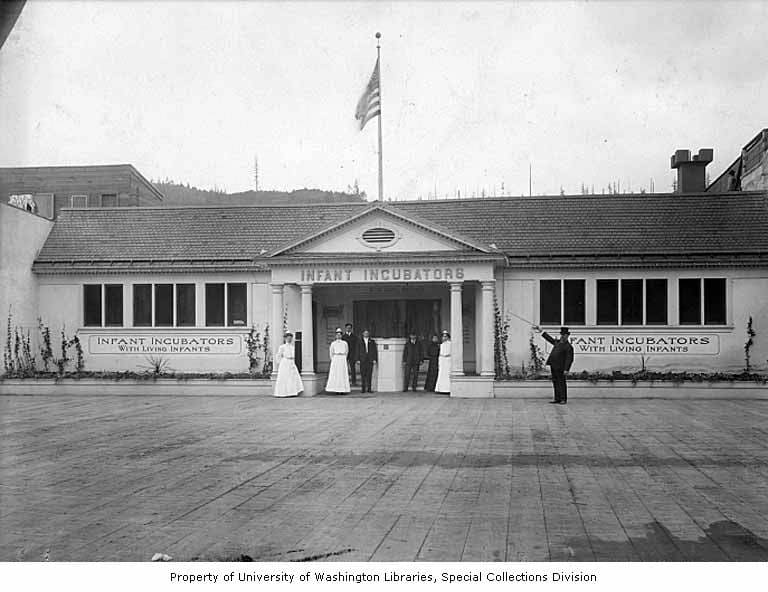
In the summer of 1905, crowds flocked to “The Trail”—the bustling amusement arcade of the Portland’s Great Extravaganza. Amidst the flashing lights, sideshow marvels, and eccentric entertainment, one of the most popular exhibits cost a quarter for admission: live, premature infants fighting for survival inside state-of-the-art incubators.
While paying 25 cents to view tiny infants through plate glass sounds dystopian today, in 1905, it was cutting-edge medical science funded entirely by showmanship.
Inside Portland’s “Artificial Mother” Exhibit
- The Cost of Care: It cost $15 per day to care for each child (an astronomical sum at the time). Remarkably, parents were never charged a dime. Ticket sales from curious fairgoers completely covered the medical bills.
- The Medical Team: A dedicated team of half a dozen skilled nurses and two doctors meticulously monitored the babies, who weighed an average of just 2.5 pounds when they joined the fair.
- The Treatment: New arrivals were bathed in a mixture of water and mustard, dosed with two drops of brandy, and nourished by on-site wet nurses.
- The Public Reaction: Local newspapers were captivated. On May 28, 1905, The Morning Register praised the “artificial mothers,” calling the exhibit one of the most “thoroughly scientific features” of the entire Exposition. The machines were marketed as “Rest and Assurance for the Tired Mothers.”
Dr. Martin Couney and the Legacy of the “Miracle Machines”
This incredible intersection of carnival entertainment and lifesaving medicine wasn’t unique to Portland. Infant incubator exhibits operated across the United States for at least four decades.
Much of this legacy belongs to Dr. Martin A. Couney, a pioneer who ran famous incubator-baby exhibits on Coney Island from 1903 to the early 1940s. Though he died in relative obscurity, Dr. Couney is now celebrated as a medical champion. By using public exhibitions to fund his work, he is credited with saving the lives of thousands of premature babies, holding reunions for the healthy children as they grew up and returned to their families.
Discover Portland’s Hidden History On Foot—or Book a Private Lecture!
History isn’t just found in dusty textbooks—it is woven into the very streets, parks, and neighborhoods of the Pacific Northwest. When you join one of my guided walking tours, you aren’t just getting a casual stroll; you are exploring the region with a PhD-level historian dedicated to uncovering the authentic, raw, and captivating narratives of our past.
Looking for an Expert Guest Speaker?
“The Trail” amusement area of the 1905 Fair was home too many more bizarre, wild, and forgotten historical attractions beyond the infant incubators. In addition to local walking tours, I am available for hire to give specialized historical talks and lectures on all of The Trail’s carnival attractions. Bring a deeply researched, engaging, and uniquely fascinating piece of Pacific Northwest history to your next corporate event, historical society meeting, or private gathering. -Dr. March
Are you ready to see the city through a completely different lens?