Last Updated on June 29, 2026
The Forgotten Fight for Groundhog Day: Oregon’s Strangest Prohibition-Era History
The beloved groundhog—the world’s most famous furry weather prophet—is not indigenous to Oregon. In fact, on February 2, 1897, The Oregonian bluntly informed its readers that they would simply have “to rely on weather bureaus and almanacs for information about the coming spring.”
However, a total lack of local marmots didn’t stop Oregon politicians from trying to institutionalize the holiday, leading to some of the strangest moments in the state’s legal history.
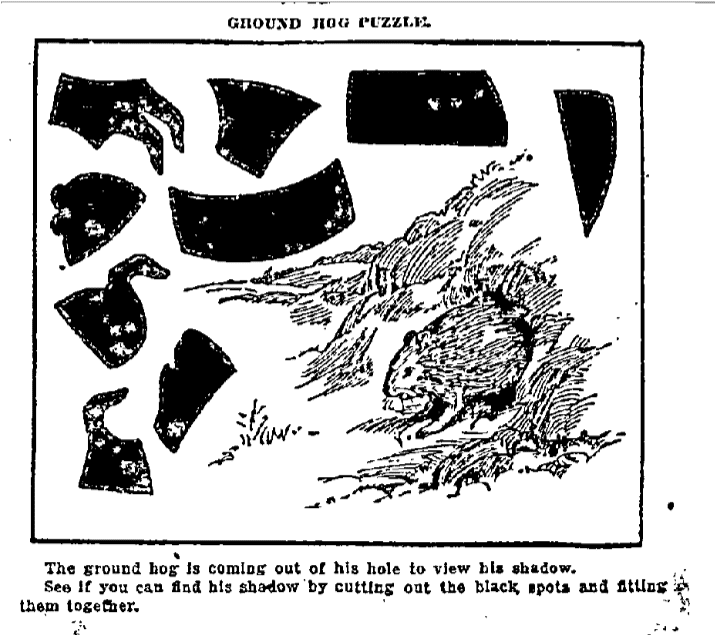
The 1916 Groundhog Day Art Activity
Historically, Groundhog Day captured the public’s imagination through pop culture. This whimsical interactive art activity, originally published in the January 30, 1916 Funny Pages of the Oregonian, invited readers to cut out and assemble their own weather-predicting shadow caster. (The activity is the image for this post.)
Politician Protests: Groundhog Day vs. Columbus Day
Oregon’s lack of groundhogs didn’t deter one passionate lawmaker in 1911. He introduced a bill declaring “the second day of February to be known as Groundhog Day,” which would “enjoin the public schools of the state to observe this day by suitable exercises.”
This wasn’t just about winter folklore; it was political retaliation. The lawmaker was deeply displeased by a newly passed bill making Columbus Day a public holiday, as well as a simultaneous push by Representative Fouts to legalize St. Patrick’s Day. The politician argued that Groundhog Day was “far more American” than Columbus Day or the “Seventeenth Day of Ireland.”