
Last Updated on June 23, 2026
FF #84: In the world of urban history, the sidewalk isn’t just concrete—it’s a time capsule.
These “hidden histories” are vanishing. Remember those metal curb guards? Between age, neglect, and necessary ADA ramp upgrades, these iron relics are becoming a rare breed. If you missed it, check out this classic video by Berkeley and Tanya from five years ago – diving into the world of curb guards. [Watch: Slabtown Tours: Berkeley Introduces Curb Guards]
Blacksmiths & Horseshoes
Lost Sidewalk Marketing Art
Jim Stewart of the St. Johns Heritage Association shared some incredible “lost” history with us. Back in 1976, a club member captured images of cement stamps from 1915 that have since disappeared. This mark featured was at N. Ivanhoe & Alta: This stamp marked the spot of Misner & Thompson, a local blacksmith shop. The Rare Horseshoe: Finding a horseshoe imprint is like finding a four-leaf clover – I could only find one other example in the Slabtown Tours office files. Christopher A. Gossett’s 1983 book, Rubbings from the Rose City, noted a rare 1905 example on a horse shoe encapsulated in the cement of the southeast corner of SE Union (now Southeast Martin Luther King Jr. Boulevard) and Alder.
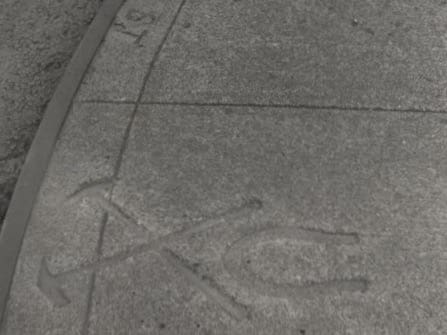
Spot the Historic Stamps Next time you’re walking the dog or grabbing coffee, keep your eyes on the pavement. You might just be standing on a piece of hidden history.
Another example of history lost from Jim Stewart.
These horseshoes where N. Charleston Ave. dead ends at N. Ivanhoe St. Maguson & Colglazier occupied the Blacksmith shop at this location when the sidewalk was laid in 1915. (Image c. 1976)
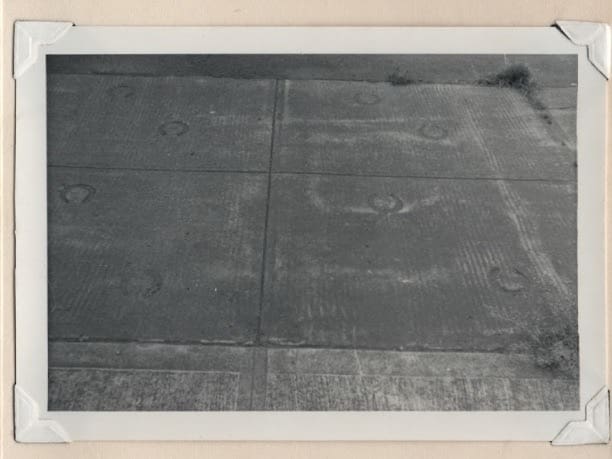
in St. Johns. St. Johns Heritage Ass. files