Fun Fact #64 How much did 2247 NW Kearney rent for in the 1970s?

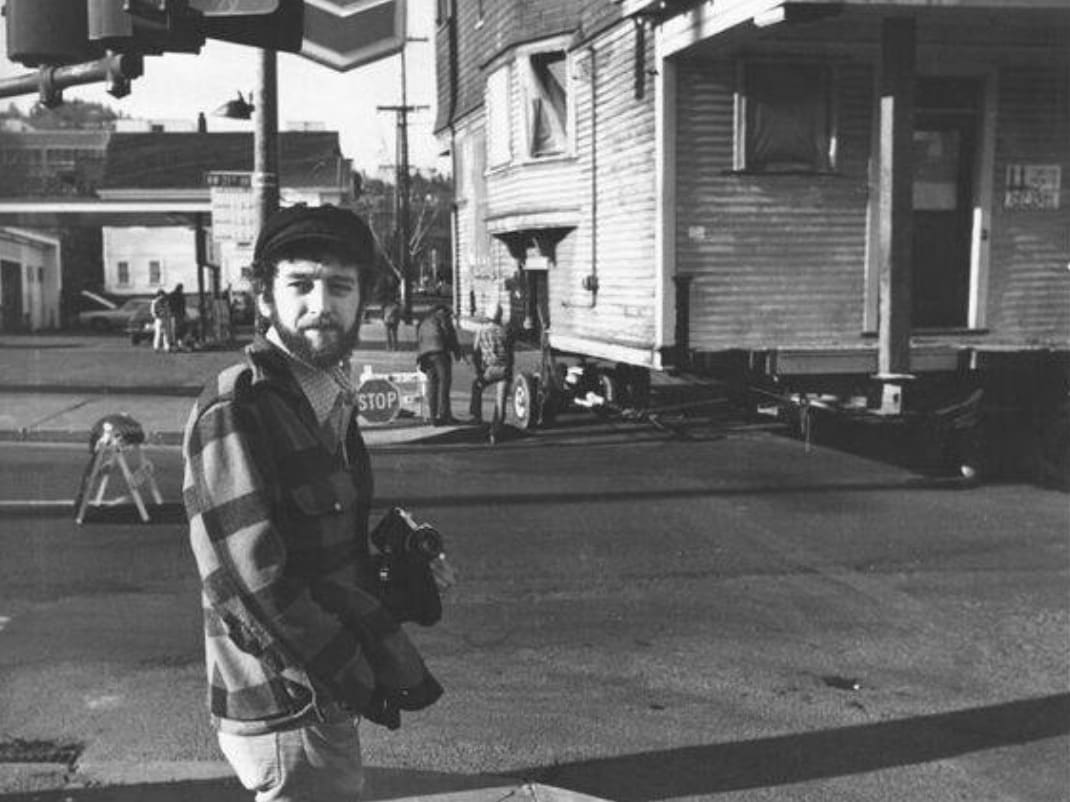
Cover of newspaper, with Kearney St House
Link to the cover story “No Portland Homes for Rent Only Apartments.”

This 1909 single family home off of NW23rd on the edge between Nob Hill & Slabtown is 2,472 square feet and rented for $65/month in the 1970s.  Image on left appeared on the cover of a marketing newspaper in my St. Johns mailbox. I remain curious why of all the houses the real estate agent could have picked from in Portland that his team selected this particular house, and an unflattering image of the home to boot. Large homes like this with one or two bathrooms often rented to a dozen individuals 50 years ago. The rent figure was shared with me by Mike Ryerson rented this home house for many years starting at $65/month.

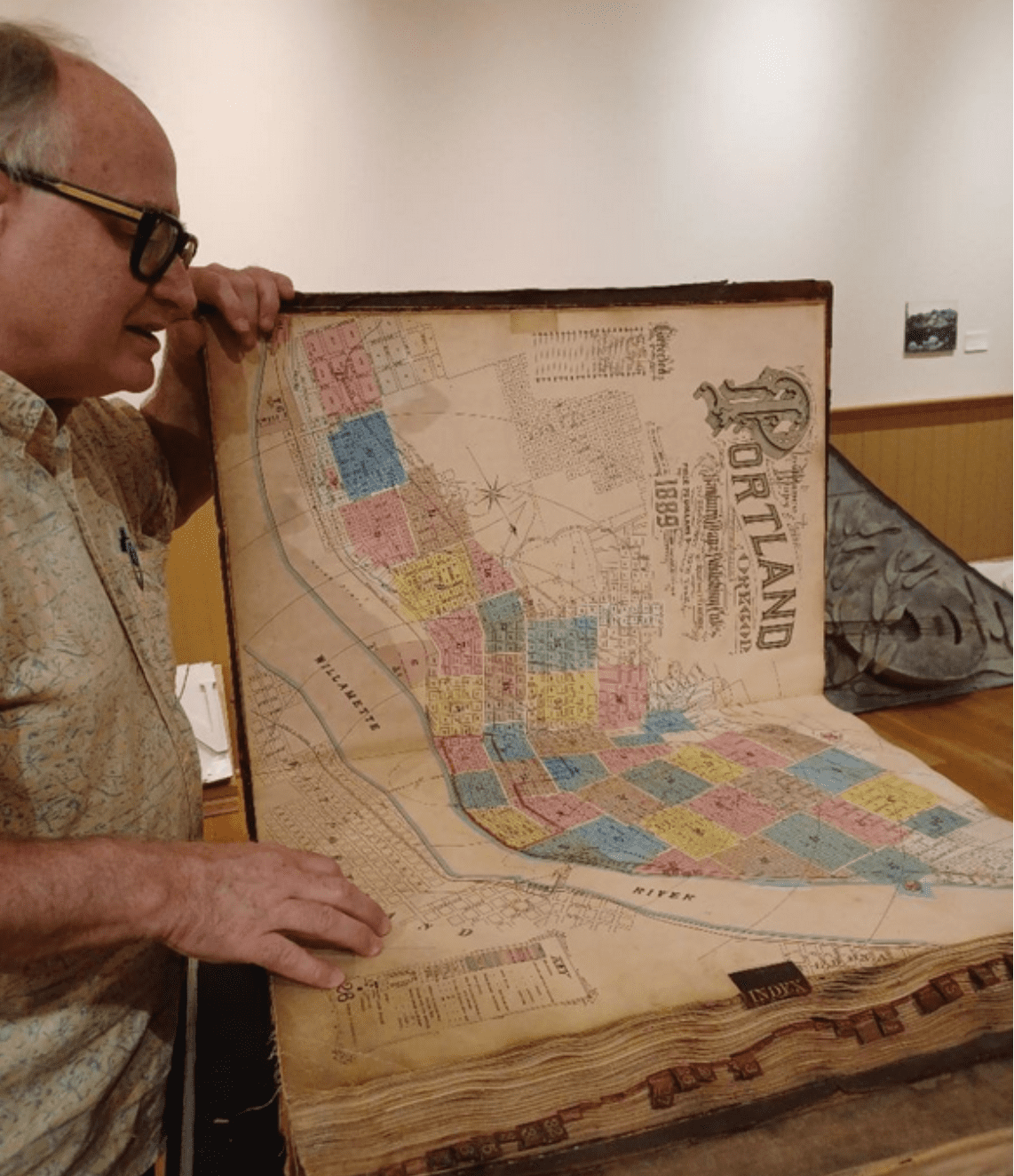
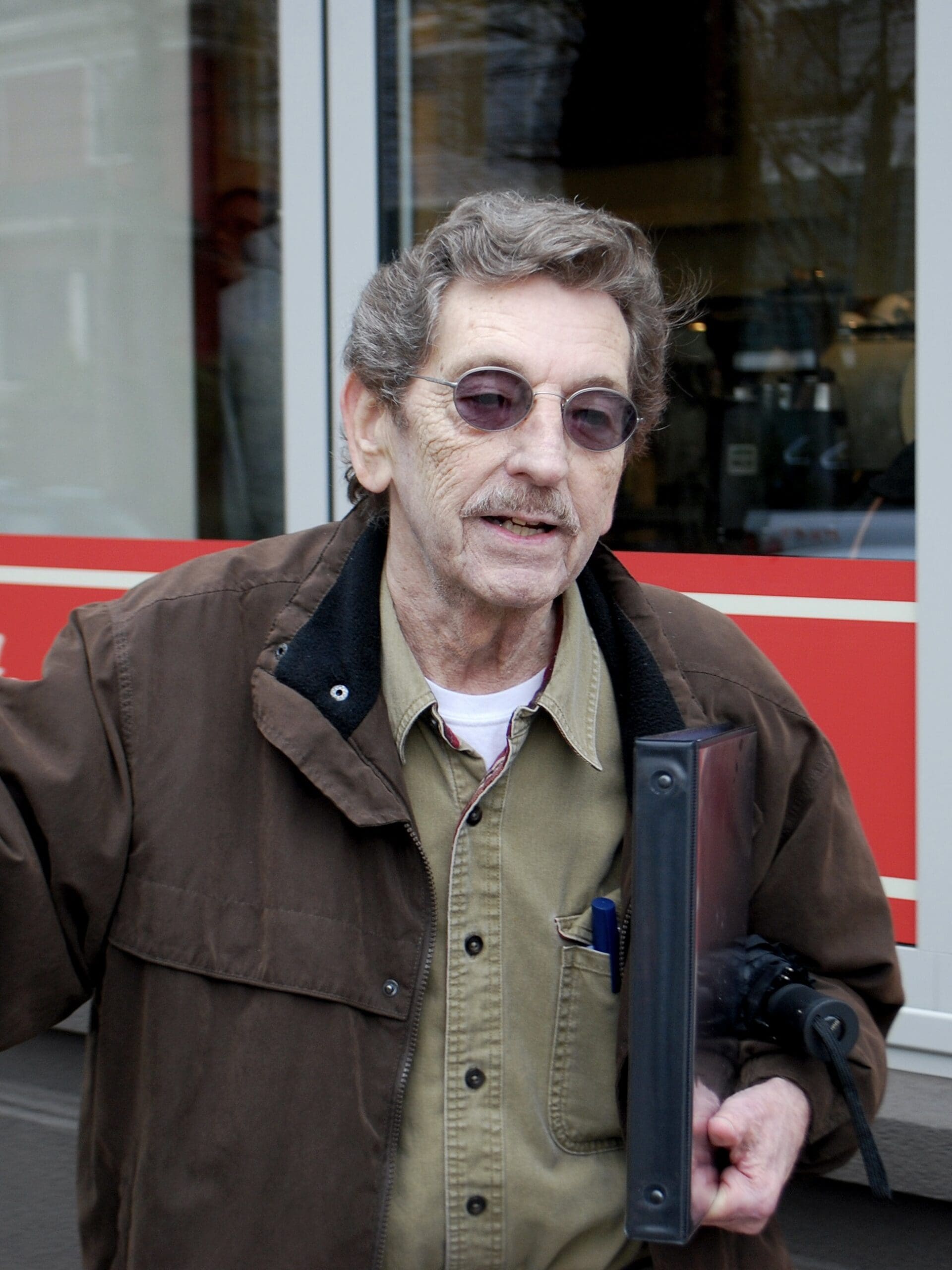
Mike Ryerson using his umbrella as a pointer, Tanya and three tour guests are also pictured mid-walking tour
Mike Ryerson & his sidekick Tanya March leading a tour in 2013.

Mike Ryerson co-designed the Slabtown tour route and often included buildings he had lived in to enrich tour content. Back in the 1970s hippies lived in many of the large homes many still struggled to pay the rent.  The rent for 2247 Kearney was $65/month for the entire house; Mike sublet rooms in the home to nurses for $50/month which covered his share of the rent. Mike thought it a tragedy when his wife put an end to that income steam.  $65 in 1970 is equivalent in purchasing power to about $496.40 today.  Zillow estimates that if this house were for rent the cost would be $4,663/month.  Because families had all migrated to the suburbs.

Additional Fun Facts Linked to the Life of Mike Ryerson:

#20 The First Head Shop on NW23rd

#34 Mike’s Escort Service

Fun Fact #63 Which Nob Hill celebrity chef’s cooking was used to entice 1,000s of workers to move west during WWII?

color image of restaurant on 23rd c. 1960

Which Nob Hill celebrity chef’s cooking was used to entice 1,000s of workers to move west during WWII?

Answer: Henry Thiele’s cooking was used as an enticement for men from Vermont to Texas to move west to work in Henry Kaiser’s shipyards.

Image from 1937 Corner of Burnside & 23rd
Henry Thiele’s Restaurant 1937 on the Corner of Burnside & 23rd Courtesy Norm Gholston

Sideview of Henry Thiele

Left: Chef Henry Thiele instructing hotel workers’ class at Girls; Polytechnic “Training Women Hotel Cooks to earn wage paid men” The Oregon Daily Journal, Apr 14, 1918 · Page 13. Even in WWI he was trying to help with labor shortages.

WWII Dorms Had No Kitchens

Henry Thiele was hired during WWII to cook for 1,000s of workers arriving in the Pacific NW. The defense industry marketed to men living on the east Coast tat a new 3,900-room dream dormitory “Hudson House” awaits you in Vancouver.  “Chef of the huge dining rooms, which can serve 1,200 meals at one time is Henry Thiele, long famous in Portland for his cuisine and in younger days a student of European cookline.”  I stumbled upon David W. Eyre’s 1942 article for the Newspaper Enterprise Association syndication in a half dozen newspapers; knowing that those dormitories were built first and that workers were being promised that housing like Vanport was being constructed and would be ready in 90 days.  The Hudson House Theater was identical to the Vanport Theater—I’ve been trying to find blueprints or as-builts.

Newspaper headline "Dream Dormitory" Houses Henry Kaiser's Workers
San Angelo Standard-Times (San Angelo, Texas) · 6 Oct 1942 · p 6

When the Benson Hotel opened in 1913 the first chief steward was Henry Thiele. Theiele’s talents established the standard of excellence for Portland dinning. During WWI he had trained matrons at Girl’s Poly to cook for hotels during labor shortages; he also talked about the need to reduce food waste and how to cook on a budget.  Henry Thiele’s Restaurant, 2315 NW Westover Road, opened in 1932.  The stucco building pictured below had table service for 150 diners and had ample free parking for 100 cars. This location is highlighted in our Women of Nob Hill Tour.

color image of restaurant on 23rd c. 1960
Image Courtesy Norman Gholston. The building is no longer standing.

Resturant Historian Weighs In

According to historian Richard Engeman, “Thiele’s social connections conferred celebrity chef status on him from the 1920s until his death in 1952.”  Text from the 1959 menu: “We are not the glamorous-type restaurant, but solid, family-eating place and over the years have built our reputation on word-of-mouth advertising.” They made their own dill pickles in the basement on the corner of Burnside and NW 23rd and in the early days had their own butcher in the basement.  In conclusion, the restaurant operated until 1990.

Fun Fact #62: Was the Hotel Repose built for the 1905 Fair?

Half demolished three story wood frame building
This image hung inside Tavern and Pool taken in 1924 outside the Bodner family tailor shop courtesy George Bodner via Mike Ryerson. It is a rare image of Besaw’s in the background with the second floor intact.

The Hotel Repose

Updated 6-19-2025 edits, new links

The Hotel Repose, a working-man’s lodging, stood on NW 23rd and Savier from 1912 until 1968. The Bodner family moved into the building in 1915 and ran a tailoring shop on the first floor of the hotel. George Bodner was interviewed by Sylvia Frankel June 26, 2007, he had this to say about his home and neighborhood: 

At that time it was a very nice – not first class – but a nice, family neighborhood. On that corner of Savier and NW 23rd, across from Besaw’s, there was a new hotel called the Hotel Repose. And along 23rd Avenue , there were stores. There was a grocery next door and a hardware on the other…We lived in back of the shop. He had a good-sized tailor shop there. And in the back was a roomy apartment. And back of that we had a backyard with chickens. My father bought the shop. He came out in 1914 and he bought the shop about 1915. We were there until 1925.

 Link to Full Oregon Jewish Museum  Interview

The Hotel Repose was still newly arrived on the block when the Bodner’s arrived in 1914. In the building’s last years after the Hotel Repose closed was occupied by the Wizard of Odds furniture store on the first floor frontage at 1629 NW 23rd, a lawn mower repair shop on the side and a Chinese gambling hall was tucked in the rear of the structure. 

Half demolished three story wood frame building
Image Courtesy The Oregonian. September 20, 1968 p 32.

History Detective Work

Despite the Sanborn footprint evidence that there was no hotel at the site in 1905, rumors persist that the hotel was built for the Lewis & Clark Exposition, or that it was a building moved in 1904 from a site cleared for the Exposition. As it turns out there was a bit of truth to all three of these narratives.

This history detective believes that the Hotel Repose was a repurposed section of the North Portland Hotel built in 1905 at the foot of NW 22nd. A significant segment possibly half of the  of the North Portland Hotel, was moved seven blocks from the corner of Guild’s Avenue and Suffolk, and  transformed into the Hotel Repose. That also explains in part why the “new” building in 1912 was an out of date design. The Oregon Journal reported on that relocation while covering the destruction of the quaintly named desolate structure. Davis Industrial Products had the building demolished to create an employee parking lot.  

1910 Federal Census

The Link to The North Portland Hotel

The North Portland Hotel in 1909, proprietor J.S. Bruck,  charged $1/week for furnished rooms, hot and cold water and bath. Most of the residents worked for the neighboring saw mills, a few for the iron works rolling mill of the Pacific Steel & Hardware Company, the streetcar, an odd farmer, miner and sailor for good measure.  The Federal Census of 1910 lists over 105 boarders in the 89 rooms at the North Portland Hotel at 734 Suffolk Street. There was a Saloon in the hotel operated by J. E Brink.  Adolph Wildman purchased the 3-story hotel in 1909 for $25,000 from the J. M. Wright Estate. The hotel and saloon were offered up for sale again on Christmas in 1910. The last historic record of the North Portland Hotel was in the 1912 Polk directory listing the property manager as the widow Mrs. Charlotte Borglund.

Join us on the Slabtown History Tours – we will take you to where the hotel once sat. 

Fun Fact #61 How old is the oldest original functioning flushing toilet in Slabtown?

Fun Fact #61 How old is the oldest original functioning flushing toilet in Slabtown?

Updated: April 28, 2025 new Links (Our Slabtown Tour does not use this toilet, curiously a Willamette Week reported in 2023 reference this post when she raved about our tours.)

How old is the oldest original functioning flushing toilet in Slabtown? 133 years old

Toilet, the Toilet Seat is Wood and the tank is about 6 feet up and is also wood.
This toilet is 133 years old and is fully functional. It is in its original home built in 1889. The tank was found under the porch and re-installed. The bowl is a Thomas Crapper style. The water flushes from the rear and empties in front into the trap.
 
Telling guess to use the facilities prior to arriving for a walking tour has been more challenging than any mask mandates, gas explosions, tour capacity limits, and reduced hours of operation rules. With all this potty stress, I distracted myself by looking into the history of the flushing toilet. Sir John Harrington, godson of Elizabeth is credit for inventing the flushing toilet in 1592. There was not a patent for the water closet until 1775.
 
Amazingly during the 1930s the Work Projects Administration (WPA) built two million outhouses across the United States. Many homes built in the 1880s and 1890s in East Portland were built with outhouses, sample. I have learned more about Portland’s historic toilets shopping at Hippo Hardware than you could ever learn online.
 
Ultimately, I had to look up Thomas Crapper and Co..  they were established in 1861 and operated just over 100 years. This British company was revived in 2010 and produces authentic reproductions of Crapper’s original Victorian bathroom fittings for sale. Thomas Crapper (b. 1836-d.1910) held nine patents. He improved the S-bend plumbing trap in 1880 by inventing the U-bend. Sadly, his name is not the origin of the word “crap”.


Fun Fact #60 How much was a pack of regular cigarettes in 1959? (or for that matter a walking tour in 1906?)

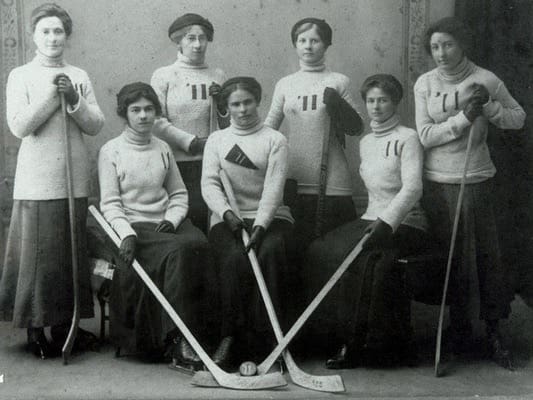
A dozen women with tobacco pipes in their mouths holding up a banner that says St Patrick and has a harp on it. Very silly poses but not a candid image.

Fun Fact #60 How much was a pack of regular cigarettes in 1959? (or for that matter a walking tour in 1906?)

Clyde Besaw at the bar in front of register. Sign states cigarettes regular are 20 cents King Size are 23 cents filter tip are 25 cents
Clyde Besaw 1959 dressed for the 100th birthday of Oregon’s State Hood. Image courtesy Mike Ryerson. (Developed in April but possibly taken on 2-14-1959)

Clyde Besaw was selling regular cigarettes from Besaw’s Cafe on NW 23rd for 20 cents a pack. After Prohibition was repealed, Besaws was granted the first liquor license in the state of Oregon. Bars and smoking went hand in hand until public health awareness.  On occasion  find images of people pretending to smoke in old pictures. Bob Hilger a former resident of Guild’s Lake Housing Authority of Portland wartime housing wanted to make sure that his children and other descendants were aware that he was only faking smoking in this image taken at their home with Forrest Park in the background.  I was not alive to meet these lovely women of St. Patricks church but I assume they would be making the same request.

St. Patrick Church women courtesy Norman Gholston

Bob Hilger and his father at their home in Guild’s Lack c. 1944 Courtesy Bob Hilger

Oregon Journal Ad. "See Chinatown"
“See Chinatown” Oregon Journal January 25, 1906 page 3.

Walking tours also have also increased in price:

Seid Beck (sometimes spelled Back) was a merchant and labor broker in Portland. His son led walking tours of Chinatown. “Chinatown…is in the very heart of the city.”-Seid Back, Jr.,  A Trip Through Chinatown in Portland souvenir book and guided food tour sold for 75 cents.  His tours appealed to a popular desire to extend touristic travel beyond the fairgrounds where our Slabtown Tours take you today.

Fun Fact #59 Roses are not always Flowers in the City of Roses.

Image taken by author December 2020.

The rose wrapping that popped up on the building at 315 NW 23rd honors Rose’s Restaurant, a business started at this location by Rose Garbow Naftalin in 1956.  Rose’s was a popular place for significant events and good memories. Wedding proposals like that of Sen. Mark Hatfield were not uncommon.

Rose listed the business for sale in 1967, selling to Max Birnbach and Ivan Runge in May 1968.  The men had started out at the Benson Hotel, where Max had been the catering manager & Ivan had been the executive chef.  They were still listed as owning the restaurant in 1982.  Max Birnbach was true to Rose’s legacy and was smart to keep the quality the same (some say even better).  Reporter Joan Johnson interviewed Max Birnbach for The Neighbor in  January 1985  “Birnbach, who was born in Vienna of Jewish parents, was in his early 20s when he was put in a concentration camp…He managed to escape and fled with his brother to Switzerland where they were interned in a labor camp.” His parents died in Auschwitz. Max was assigned to the kitchens in the labor camp. He attended a hotel restaurant school in Zurich after the war.

The original location on NW 23rd shuttered in 1993.  The building was remodeled in 1994 for Restoration Hardware.  Rose’s Restaurant was revived in 2001 by Dick Werth and Jeff Jetton and opened its doors on NW 23rd & Kearny (currently the location of Bamboo Sushi).  According to Business Journal’s Wendy Culverwell (12/4/2005) “Though [Werth] dreamed of reviving Rose’s at its original location, the vision foundered.”

Rose learned to cook from classes by mail.  Inquiring minds want to know—did her teacher get to taste her cooking?

Rose from Cook Book Cover.

Rose Garbow Naftalin was less than 5 feet tall and 100 pounds soaking wet.  She was born in today’s Ukraine on March 18, 1898.  She moved to Chicago with her family at age five.  At 19 she married Mandel Naftalin, an accountant who loved good food.  She had no training in the kitchen and she wanted to please her husband.  She was tenacious; she took correspondence courses in cooking and read cookbooks and asked friends for culinary advice.  During the Great Depression Mandel lost his job and he was confident that her amazing cooking could support the family.  They bought a deli together in Toledo, Ohio.  She cooked food in their home and they took turns running the shop so that one of them could always be home with their two children.  After he died in 1939, she ran the deli alone.


Rose moved to Portland in 1955 to be near her family and opened Rose’s Restaurant on NW 23rd the next year.  Her old-school Viennese pastries and New York-style deli kosher deli mainstays developed a following.  She was known not only for her amazing quality and generous portions but for a generosity of spirit—baking 7-layer cakes for community members as gifts on their birthdays.  She retired in 1967.

Customers remember fondly the authentic Reubens, matzoh ball soup, and famous giant cinnamon rolls.  What customers may have forgotten was that the lounge, not the restaurant, covered the expenses.  Rose told the Oregon Journal (10/25/78) that the cocktails at the lounge “pulled me out of the red many a month”—that was the best end of the business.

Oregonian clipping from Find a Grave.

She did not slow down in retirement.  She wrote two cookbooks that promoted what was now a chain of restaurants.  She wrote her first cookbook, Grandma Rose’s Book of Sinfully Delicious Cakes, Cookies, Pies, Cheese Cakes, Cake Rolls & Pastries, in 1975.  Published by Random House, it sold more than 150,000 copies in 12 printings.  She followed that in 1978 with Grandma Rose’s Book of Sinfully Delicious Snacks, Nibbles, Noshes & Other Delights.  Rose’s recipes were indeed sinfully delicious.


The cookbooks were a way to heal the relationship with her daughter-in-law after the death of Rose’s grandson.  Their unique home-spun presentation of recipes and photographs contributed to their success.  The 1978 cookbook became the third most popular cookbook that year, behind those by Julia Child and James Beard.  The woman who learned to cook by mail, whose restaurant at 315 N.W. 23rd Ave., became one of the earliest hangouts for fine food in Northwest Portland, was now one of the nation’s leading cookbook authors.  She filled her retirement years traveling the country in signing books and giving cooking demonstrations.  Beloved for her community spirit, she died at age 100 on April 16, 1998.

Her advice to readers: keep split vanilla beans in the sugar and always use real butter because quality ingredients are the key to baking.


Fun Fact # 58 Which Slabtown building has the tallest fire escape?

Fire Escape White painted (most fore escapes in Portland are left cast iron black) lots of sun light so glare and sharp shadows.

Which Slabtown building has the tallest fire escape?

Answer: Montgomery Park has the tallest series of fire escapes and possibly the most banks of fire escapes in Slabtown.

Two banks of fire escapes on the north facade. Courtesy Unico Properties purchased building in 2019 from Bill Natio Comp.

Currently, this building is the second largest office building in Portland.  Montgomery Ward & Company building was a department store and warehouse distribution center in operation from 1920-1985.

Postcard c. 1920 showing the Portland Montgomery Ward & Co. building. There were similar buildings in Oakland, Chicago, Baltimore, Kansas City, St. Pauls, and Fort Worth.

Close up of a fire escape on the south facade.

Cropped in image from the historic marker in front of the fountain on the west side of the building. The building is under construction yet you can clearly make out a train locomotive peeking out of the building (c.1920)

I use to think historic postcards that are bereft of the fire escapes were pulling my leg when they depicted a train with smokestack billowing entering the structure.  In fact trains were able to deliver directly to basement. The building housed a postoffice for many years.

Fire escape used in Drug Store Cowboy:

The Irving Street Apartments’ (now “The Irving”) the fire escape was featured in Drugstore Cowboy (1989) American crime drama film directed Portland film maker Gus Van Sant.Link to all PDX Location in the film. Image MLS Listing
Fire escapes are not protected in Oregon, even when they were included in the original architectural drawings and are attached to designated landmark buildings, and like curb guards they are fading away. During Covid-19 you might be looking for something new to watch why not pick a movie that features a fire escape?
The Irving Street Apartments’ (now “The Irving”) the fire escape was featured in Drugstore Cowboy (1989) American crime drama film directed Portland film maker Gus Van Sant.Link to all PDX Location in the film. Image MLS Listing

Fun Fact #57 What is the oldest retail business in Northwest Portland?

Display cases inside Chown Hardware Co. There are guns under the glass in the case on the right. Possibly fishing reels or maybe door knobs in the case on the left. Display of riffles in the background. In the foreground boot and rain gear.
Chown Hardware Exterior C. 1900 Courtesy Chown Hardware Pinterest Page

The oldest retail business in Northwest Portland is Chown Hardware dating back to 1879.  Still a family owned business that has evolved to meet the community needs. Here’s a look at some of Northwest Portland’s most enduring establishments:

Northwest’s Legacy Businesses

1875 Good Samaritan Hospital

1879 Chown Hardware  (YouTube video coming soon.)

1885 Fruit & Flower “Joyful Learning Since 1906” the organization pre-dated the nursery school

1903 Besaw’s (Not in Continuous Operation) Link to Fun Fact #17 about the petition to shut Besaw’s

1926 Friendly House (YouTube Legacy Clip Coming Soon)

1941 Joe’s Cellar Our A Night With Ghost tour starts across from Joe’s

1944 Ring Side (Fire 2025) 

1958 Radio Cab (founded in 1946, moved to headquarters on NW Kearney)

1962 Cinema 21 (Theater operations in space since 1926)

1965 William Temple House   (YouTube Legacy Clip Coming Soon)

1973 Food Front Co-op (Closed 2023 – a reminder that even legacies can end)

1975 Kitchen Kaboodle

1978 Inn at Northrup Station (Carriage Inn) (YouTube Legacy Clip Coming Soon)

1979 Twist, Child’s Play (Mud Puddle Toys founded 1987 merge 2017, closed 2025)

1980 Elephant’s Deli

1983 Jim & Patty’s (Coffee People) (closed/reopening 2025), Papa Hayden, Escape From NY Pizza

1984 Tavern & Pool (McMenamins)

1985 Kornblatt’s NY Style Deli, Dazzle (closed)

1986 Nob Hill Bar and Grill (Nobby’s), NW Examiner (Youtube Legacy Video Pending)

1988 New Renaissance Book Shop    (Youtube Legacy Video Coming Soon)

1989 Anna Bannana’s (Closed 2025)

1993 West Coast Bento

1994 The Marathon Tavern

1996 Coffee Time (Youtube Legacy Video Clip Coming 2025), Istanbul Rug Bazaar (closed)

1998 NW International Hostel

1997 Kelsall Chiropractic

2000 Vivace (Closed 2021), Le Happy Creperia & Bar, Baue Thai (closed), August Moon

2001 Ken’s Artisan Bakery, Yurs

2005 Dragonfly Coffee House

We also look forward to confirming the legacy status of other beloved establishments like 21st Grill, Marrakesh, Nob Hill Shoe Repair, Ling Garden, Uptown Barber Shop, and Delphinos/Serrotto. These businesses are more than just places to shop or eat; they are vital threads in the rich tapestry of Northwest Portland.

Updated 8-12-2025 New Links

Gone But Not Forgotten

Henry Thiele’s Restaurant 1932-1990

Fryer’s Quality Pie, 1934-1992  Link to Fun Fact #25 about Quality Pie

May Day Fun Fact 56 What was Bloody Wednesday?

May Day Fun Fact 56 What was Bloody Wednesday?

A crowd of men are walking towards the photographer. They are on a weed/grass covered field with a train track.
Striking longshore workers occupy the railroad tracks near Pier Park and N. Columbia Blvd. courtesy of City of Portland Archives & Records A2004-002.9377,

What was Bloody Wednesday?

Warehousemen’s Union (ILWU) to gain recognition and better working conditions. The strikers were attempting to block a train carrying cargo through the picket line. The police, led by Chief B.K. Lawson, were instructed to clear the way. According to the provided text, police and strikers offered conflicting accounts of the event, with police claiming they fired about 35 shots and strikers alleging several hundred.

The Aftermath and Significance

During the confrontation, four strikers—Elmus W. Beatty, Peter Stephenson, Bert Yates, and W. Huntington—were shot. The violence also damaged the surrounding area, with bullets hitting many trees in Pier Park. Despite the police action, the picket line held, which the provided text describes as a victory for the ILWU. This event demonstrated the high stakes and violent nature of labor disputes during this era and ultimately contributed to the union’s success in achieving recognition.

For more depth watch: The 1934 West Coast waterfront strike | Oregon Experience | OPB

We offerer St. History Johns Tours that does not take guests to Pier Park at this time but this history can be offered in a private tour.

Updated August 18, 2025 Alt Text, links, grammar.

Fun Fact # 55 Marge Davenport, a staff writer for the Oregon Journal and author of several short story collections, wrote about many amazing dogs. Which dog from her books was the star of a silent film produced in Portland?

Fun Fact # 55 Marge Davenport, a staff writer for the Oregon Journal and author of several short story collections, wrote about many amazing dogs.  Which dog from her books was the star of a silent film produced in Portland?

Fun fact #55: Marge Davenport, a staff writer for the Oregon Journal and author of several short story collections, wrote about many amazing dogs. Which dog from her books was the star of a silent film produced in Portland?

Bobbie at The Reo restaurant at South Water St., Silverton.
Courtesy Vades Crockett, Silverton

The Brazier family of Silverton, Oregon—Frank, Elizabeth, Leona, and Nova—were the owners of Bobbie, a Scotch-collie dog was born in 1921. In 1923, when the Braziers were visiting relatives in Wolcott, Indiana, two-year-old Bobbie was attacked by three other dogs and fled. The Braziers searched for him around Wolcott, but eventually gave    up and returned home.


Where did the 3,000-mile journey of Bobbie the Wonder dog take him?

Oregonian (published as The Sunday Oregonian.) February 24, 1924 page 12


What made Bobbie so famous is that he travelled 3,000 miles to get home. Six months after going missing, “wonder dog” Bobbie came home, breaking the bedroom window to greet his master. Witnesses claimed Bobbie’s six-month, 3,000-mile journey started with him walking in ever-widening circles. Bobbie met lots of people on the way home to Silverton—one boy was nice enough to take Bobbie in and restore him to health. Bobbie then escaped and headed west and down the Gorge into Portland. Going south from there, Bobbie finally got back to Silverton.

The Call of the West featuring The wonder Dog “Bobbie” 1924 35mm nitrate film

A group of Portlanders made a silent film called “The Call of the West” , presented by the Columbia Feature Film Syndicate and featuring the actual Wonder Dog “Bobbie”. The film was directed by E. N. Camp, the scenario and title were by S. E. Chambers, and it was photographed by F. C. Heaton and Fred St John. The movie takes place before the family left for Wolcott, Indiana, presenting a fictional story using Bobbie the collie as the star. The plot begins with the dog being taken and driven off by a truck. Then the boy the dog belongs to in the movie gets help because he cannot drive to rescue his dog. He gets Bobbie back. He tries to convince a baseball team called the Tigers to let him be the team’s manager but a boy on the team said he has to pay for the team (or, as the boy puts, it “produce the coin”). He sells his dog to get the money for the baseball team but he steals Bobbie back from the man he sold Bobbie to. Link to watch the Movie. Link to Silverton Road Trip (since like me you’re stuck home out of school and can’t road trip right now. News story about Bobbie’s legacy).

Author of this Fun Fact was Berkeley Sherman’s Guest Author Age 12.  My son will be excited when school reopens.